
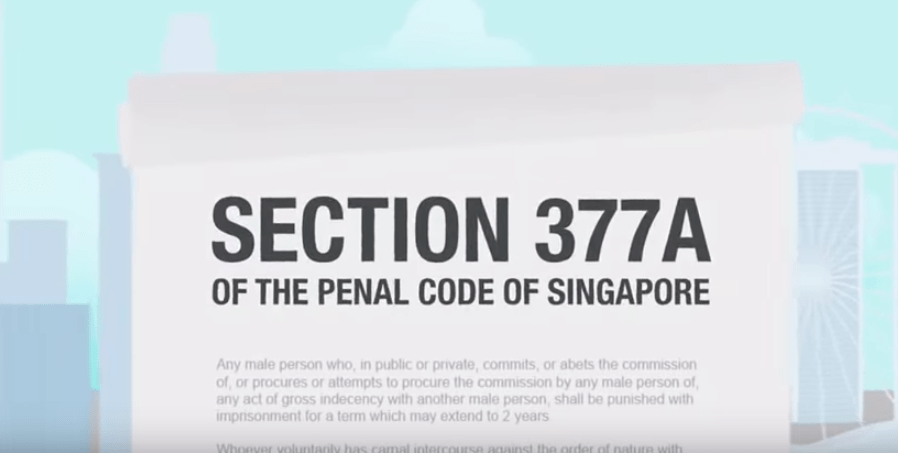
Objection to 377A not about religion, but about what repealing could lead to

What is missing from the opinion article by Professor Tommy Koh are two basic issues which go beyond whether to keep or repeal Section 377A, and which will determine the direction Singapore takes today and in the decades ahead (Section 377A: Science, religion and the law; Sept 25).

The first is the value of the family as the cornerstone of society.

Assuming Section 377A is repealed, there will very likely be a clarion call for same-sex marriages to be legalised, followed by such unions to adopt children and the demand for all other civil liberties.

A Sin Or A Crime? – On Legislating Morality

A repeal of section 377A will not merely remove the offence. It is much more significant than that. Because of the concept of negative liberty, the removal of section 377A puts homosexual lifestyle on par with heterosexual lifestyle. It is to accord both lifestyles a sense of parity.

In other words, the repeal of this piece of legislation can gradually result in significant changes in the ‘constitutive morality’ of our society (Devlin).

REASONS TO RETAIN S377A

The Government maintains a position that all religious communities are free to give voice to their conscience in matters that have moral impact. People of religious faith have equal right to be included in rather than dismissed from the public forum of debate. Some homosexual advocates argue that religious citizens should refrain from advocating that the State laws should criminalise conduct that they consider immoral. This line of argument actually contradicts the definition of secularism. For what they are really saying is “You shouldn’t make laws based on your morality, but on mine instead.”

At level of international law, there is no established human right to ‘sexual orientation’

First, there is no established human right to “sexual orientation” at international law — it is a contested proposition. There is no United Nations (UN) treaty which expressly underwrites discrimination on grounds of “sexual orientation”, itself an ambiguous term.

Attempts to read “sexual orientation” into “sex” (a biological term) in interpreting treaties such as the Covenant on Civil and Political Right are controversial and not universally accepted. While certain UN bodies/officials prefer an expansive reading of “sex” as encompassing “sexual orientation”, their opinions are not legally binding.

Design a site like this with WordPress.com
Get started